

If you have any questions, you can directly consult our online customer service. You can visit us online via WhatsApp. We look forward to your visit.
WhatsApp:8618703635966 Online
Processless Thermal CTP Plates for High-Volume Printing and Commercial Applications
In traditional offset plate-making workflows, processors, chemical developers, water rinsing, and waste-liquid treatment have long been major sources of cost and environmental pressure. As environmental regulations continue to tighten in 2026, processless thermal CTP plates have officially transitioned from an experimental option to a mainstream solution for commercial printing.
What Is a Processless Thermal CTP Plate?
Conventional thermal CTP plate-making typically requires processors and chemical solutions, resulting in high equipment investment, complex operation, ongoing maintenance costs, and significant environmental burdens.
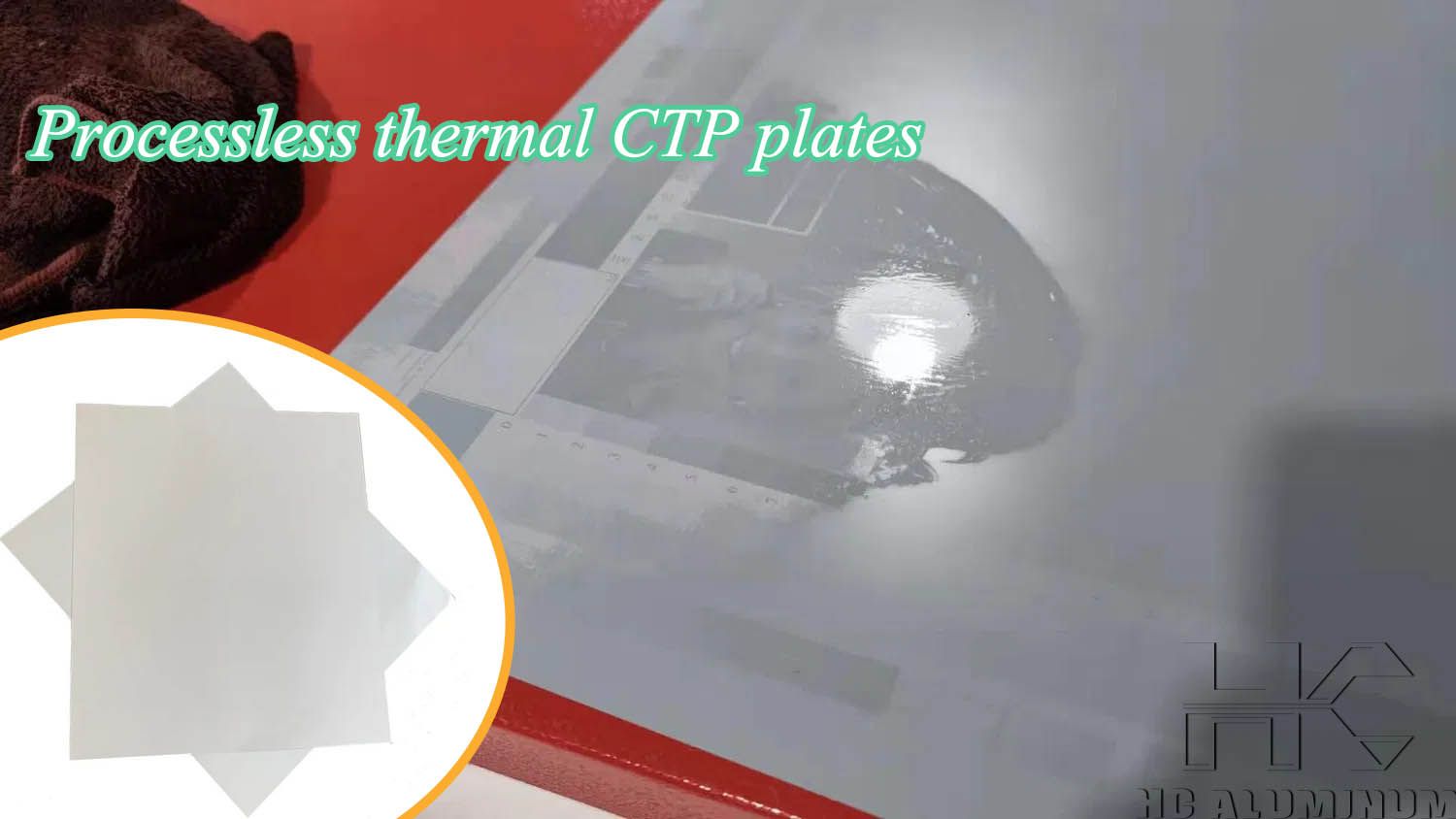
A processless thermal CTP plate achieves direct imaging with 830nm thermal lasers and on-press self-development through optimized photosensitive coating design. This fundamentally simplifies the plate-making process and makes it especially suitable for high-volume, time-sensitive commercial printing applications requiring consistent and reliable output.
Understanding the Technical Principles
1. Imaging Principle
The thermal-sensitive coating undergoes physical or chemical changes under high laser temperature, forming image areas that accept ink. Non-image areas naturally repel ink without additional processing.
2. Processing Methods
Processless thermal CTP plates are typically classified into:
Water-rinse type: Requires only clean water to remove the non-image coating.
True processless type: Can be mounted directly on the press for zero-processing printing.
Product Structure Overview
1. High-Stability Aluminum Substrate System
From a manufacturing perspective, processless thermal CTP plates typically use high-purity 1050 or 1060 aluminum substrates, which undergo precision electrochemical graining and anodizing to create a uniform and dense microporous structure. This significantly enhances:
Plate hydrophilicity and wear resistance
Ink–water balance stability
Image consistency during long print runs
A stable aluminum substrate is the foundation for continuous, high-volume printing.
2. High-Sensitivity Processless Photosensitive Coating
The coating design of processless thermal CTP plates focuses on:
High responsiveness to 830nm thermal laser exposure
Wider exposure latitude
Sharp dot reproduction and crisp image edges
Even under high-speed plate-making and frequent plate changes, the plates maintain stable imaging performance and reduce error rates.
Core Advantages of Processless Thermal CTP Plates
1. Significantly Improved Production Efficiency
Shorter plate-making cycles: Thermal imaging can be completed in minutes, allowing plates to go from design to press within hours.
Reduced manual intervention: Fully automated imaging minimizes human error and improves overall workflow efficiency.
2. Lower Operating Costs
No chemical consumption: Eliminates the purchase, storage, and handling of chemicals.
Zero wastewater treatment cost.
Simplified equipment maintenance: Thermal imaging systems require less maintenance than chemical processing equipment.
3. Environmentally Sustainable
Green production: No chemical waste discharge, meeting global environmental standards and sustainability goals.
Resource recycling: Waste photosensitive coating materials can be recycled, further reducing environmental impact.
4. Reliable Plate Quality
High resolution and accuracy: Modern thermal CTP plates can achieve resolutions of over 2000 lpi, ideal for high-quality images and fine text.
Excellent ink and wear resistance: Optimized plate structures maintain consistent print quality over long press runs.
5. Flexible Application Scenarios
Suitable for various substrates: From newsprint and magazines to books, packaging, labels, and inserts.
Wide press compatibility: Compatible with most offset printing presses, including both traditional and modern digital-assisted systems.
Typical Application Areas
Processless thermal CTP plates are widely used in:
Commercial brochures and promotional materials
Color packaging boxes and instruction manuals
Newspapers, magazines, and educational textbooks
Large-volume standardized commercial print orders

Key Differences Compared with Traditional CTP Plates
| Comparison Item | Processless Thermal CTP Plate | Traditional CTP Plate |
| Development Method | Water rinse or direct on-press | Chemical development |
| Environmental Impact | Zero waste liquid, eco-friendly | Chemical waste requiring treatment |
| Production Efficiency | Eliminates developing and rinsing, reducing plate-making time by 30%+ | Complex workflow, longer waiting time |
| Total Cost of Ownership | No chemical or waste-treatment costs; more economical long-term | Continuous chemical purchases, maintenance, and waste-treatment costs |
| Ideal Applications | High-volume commercial, newspaper, and packaging printing | Small to medium runs and short-term projects |
Selection Recommendations for 2026
When selecting processless thermal CTP plates, printing companies should focus on:
Compatibility: Ensure the plate is compatible with existing 830nm thermal CTP setters and printing inks (including UV inks).
Latent image visibility: Check whether a clear latent image is visible after imaging for easier inspection.
Run length durability: Choose plates suitable for short runs (50,000-100,000 impressions) or long runs (over 100,000 impressions) based on business needs.